Web Design
/
Identity
/
Film
Downtown Alliance NY
(
7
)

/ About the project
The Alliance for Downtown New York is the voice of Lower Manhattan, serving a remarkably broad audience that includes residents, visitors, businesses, brokers and civic leaders. Its website needed to reflect the energy of the district while making a large volume of editorial, research and practical content easier to discover and navigate.
The project focused on modernizing the digital experience without rebuilding everything from scratch. The goal was to create a stronger editorial platform, improve usability and search, and give the Alliance more expressive tools for telling the stories of Downtown New York.
/ Credits
Client:
Downtown Alliance NY
My Role:
Design Lead / Product Designer
Services:
Product Strategy, UX, Editorial Design, Design System
/ Year
2024


/ PROBLEM
The website had accumulated duplicative content, cluttered navigation and technical inefficiencies over time. Valuable research and editorial work was often difficult to discover, while the platform needed to serve very different audiences without adding more complexity to an already extensive content ecosystem.
/ SOLUTION
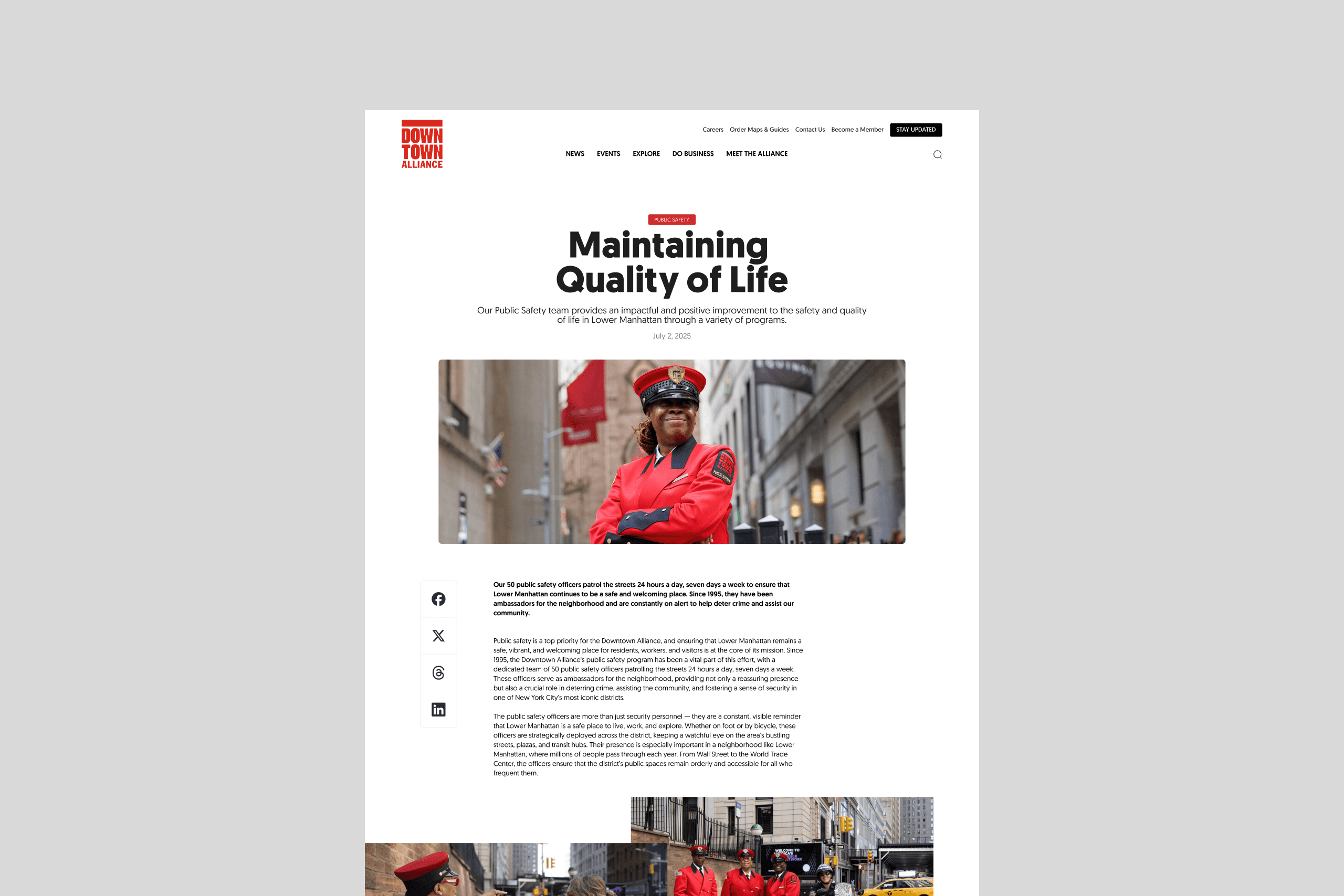
The experience was redesigned around clearer navigation, improved search and a new set of flexible storytelling components. The visual system introduced a more editorial approach to content, allowing articles, research and district stories to feel more immersive and magazine-like while remaining compatible with hundreds of existing pages.
/ RESULTS
The refreshed platform was designed and delivered in less than three months, preserving backward compatibility while significantly improving the way content could be presented and discovered. The Alliance gained a more flexible publishing system and a digital presence better suited to the pace, diversity and character of Lower Manhattan.
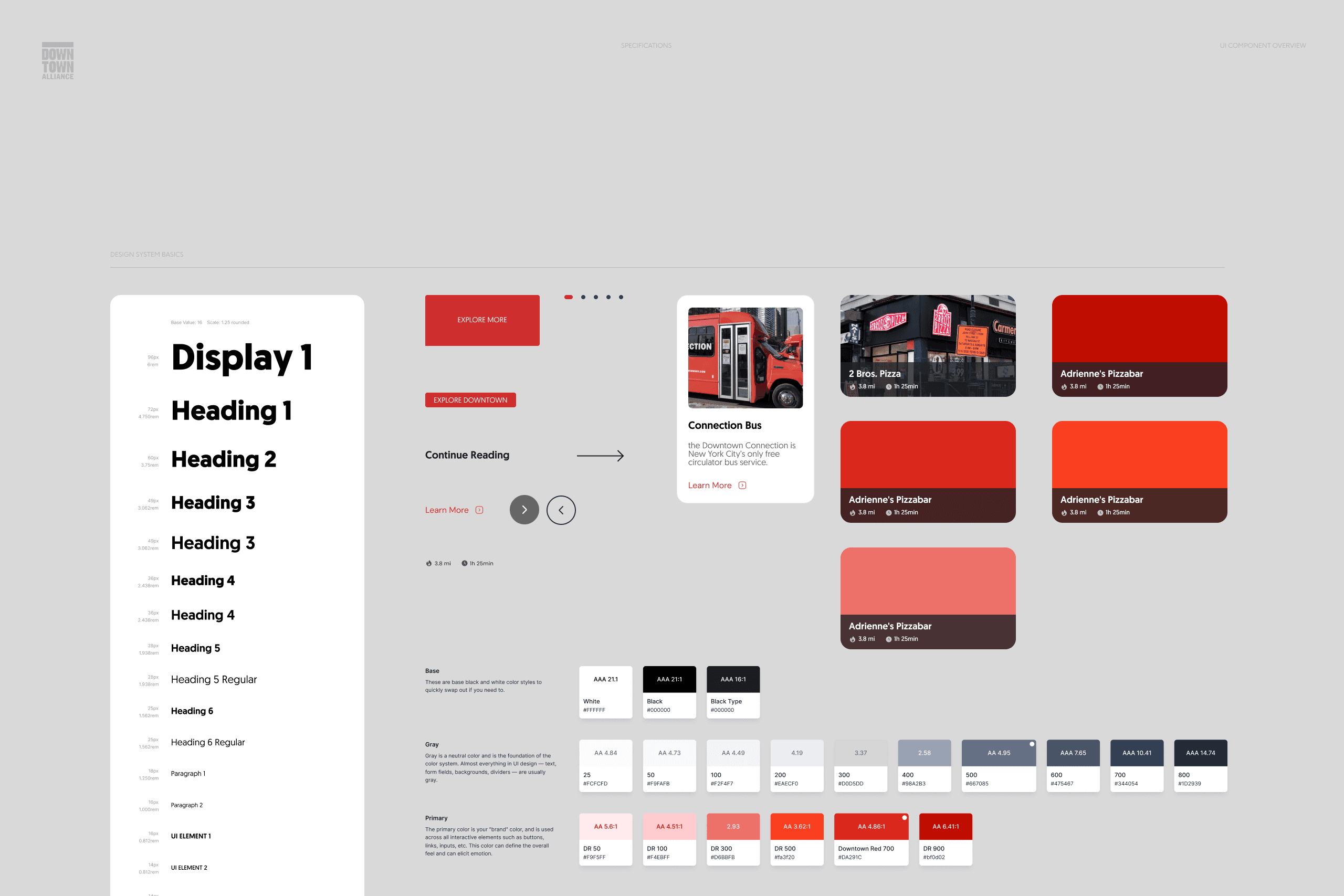

/ PROJECT OVERVIEW
The design direction started from the idea that the Alliance is not simply an information resource, but a publisher documenting one of the most dynamic districts in New York. That led to a stronger emphasis on editorial hierarchy, typography, photography and modular layouts capable of supporting everything from neighborhood stories to business research.
Rather than imposing one rigid page structure, the system was designed to give content teams a flexible set of components that could create different levels of rhythm, density and visual impact. Combined with improvements to navigation, search and performance, the result was a platform capable of making a complex content ecosystem feel clearer, more contemporary and more engaging.



OTHER
PROJECTS


Get in touch